

By Kaley Medina, Founder & CEO of Live Love Sleep®
It's 2:00 AM. You're swaying in a dark room with a baby who won't settle, your phone glowing in one hand and a cold cup of coffee waiting somewhere downstairs. If that sounds familiar, take a deep breath. You are not alone, and you are not doing anything wrong.
Motherhood is full of joy, but it also brings an exhaustion that can test even the strongest of us. When sleep disappears, everything feels harder: your energy, your patience, your mood, even your connection with your partner.
We're often told to "sleep when the baby sleeps" or that "it's just a phase." But what happens when the phase stretches into months and your whole household is running on empty?
That's where sleep coaching comes in. Let's talk about what it really is, why it can change your family's days as well as your nights, and how to know when it's time to reach out.
What Is Sleep Coaching?
Sleep coaching is the process of gently guiding your child to build healthy, age-appropriate sleep habits and learn the skill of falling asleep independently.
Sleep itself is natural. Falling asleep on your own is a learned skill. Just like walking, using a spoon, or riding a bike, it takes practice, consistency, and a supportive environment. Babies aren't broken when they struggle with it. They simply haven't been taught yet.
A professional sleep consultant acts as your educator, guide, and cheerleader. Instead of handing you a generic book or a one-size-fits-all schedule, a consultant looks at your child's whole picture:
Temperament and natural sleep rhythms
Wake windows and the daytime schedule
Feeding schedule and calorie needs
The sleep environment, including light, noise, and temperature
Your parenting style, comfort level, and goals
From there, she builds a step-by-step plan made for your child and stays beside you as you carry it out, troubleshooting setbacks, adjusting as your child grows, and encouraging you when you need it most.
Three Myths That Keep Parents From Asking for Help
Many parents hesitate because of the stigma around sleep training. Let's clear up the biggest misconceptions.
Myth: Sleep coaching means leaving my baby to cry it out. Fact: Modern sleep coaching includes a wide range of gentle, gradual methods. You can stay present, soothe, and comfort your child while they learn. The right approach is the one that fits your child and your comfort level, and a good consultant will never push you toward something that doesn't feel right.
Myth: It will damage my bond with my baby. Fact: A well-rested child and a well-rested parent are a powerful combination. When kids get the restorative sleep their growing brains need, and when parents have the energy to be patient and present, the connection between them tends to grow stronger, not weaker.
Myth: I should be able to figure this out on my own. Fact: Every child is different. What worked for your best friend's baby, or even your first child, may not work at all for your youngest. Asking for expert help is not failing. It's choosing to take care of your family.
Why Sleep Matters So Much
Sleep is not a luxury. It's a foundation for physical health, emotional balance, and development, for children and adults alike.
It fuels your child's growth. During deep, uninterrupted sleep, your child's body releases growth hormone, strengthens the immune system, and consolidates everything they learned that day. Well-rested children generally have an easier time managing emotions, focusing, and handling the ups and downs of daytime life.
It protects your well-being. Chronic sleep deprivation takes a real toll on parents. It's linked to anxiety, mood changes, brain fog, and burnout, and it can make postpartum recovery harder. When you're running on fragmented sleep night after night, staying patient and present is an uphill climb. Helping your child sleep is also an act of self-care for you. If you're struggling with your mood, please talk with your doctor too. You deserve support on every front.
It gives children a sense of security. Kids thrive on predictability. A consistent bedtime, a calming wind-down routine, and age-appropriate wake windows tell your child, "You're safe, and you know what comes next." Over time, that predictability makes naps and bedtime smoother for everyone.
When Is the Right Time to Seek Support?
Every family's tolerance for tired is different, and there's no "right" moment you have to hit. Still, a few signs suggest professional guidance could help.
Bedtime takes hours. If you're rocking, bouncing, feeding, or climbing the stairs again and again just to get your child down, bedtime has lost its calm.
Frequent night wakings beyond the newborn stage. Newborns wake to eat, and that's normal. But if an older baby or toddler wakes every one to two hours, they may be relying on a "sleep prop," like rocking, feeding, or a pacifier, to get from one sleep cycle to the next.
Short, unpredictable naps. If your baby routinely wakes after 20 to 30 minutes and can't link sleep cycles, their daytime schedule may need a gentle reset.
Very early mornings. If your day regularly begins at 4:30 or 5:00 AM, timing, light exposure, or sleep needs may be out of balance.
A big transition is coming. Returning to work, moving from crib to toddler bed, welcoming a new sibling, or dropping a nap can all disrupt sleep. A plan in advance keeps routines steady.
You feel dread at bedtime. If evenings fill you with anxiety, your current routine isn't serving your family, and that is reason enough to ask for help.
What Working With a Sleep Consultant Looks Like
Working with a consultant is a supportive partnership, and the process is simpler than most parents expect:
Assessment. Your coach learns about your child's health, feeding, sleep space, schedule, and temperament.
Customized plan. You receive a step-by-step strategy with age-appropriate wake windows, a bedtime routine, and gentle responses to night wakings.
Implementation. You put the plan into action at a pace that feels manageable and comfortable to you.
Ongoing coaching. As your child adjusts, your coach reviews sleep logs, makes real-time tweaks, and keeps you encouraged through the tough nights.
The result isn't just more sleep. It's a calmer evening routine, easier days, and parents who feel like themselves again.
A Little About Me
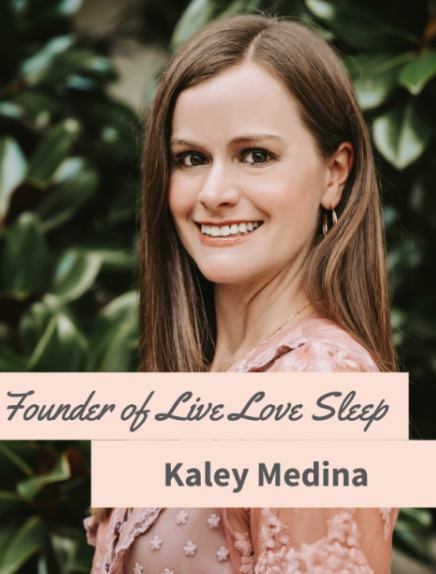
Hi, Houston moms! I'm Kaley Medina, Founder and CEO of Live Love Sleep®. I'm a Certified Pediatric Sleep Consultant, a Potty Training Coach, and a mom, so I've walked in your shoes.
When my first child was born, I felt firsthand what severe sleep deprivation does to your mind, body, and spirit. That season sparked my passion for helping other parents avoid suffering in silence. Over the years, I've had the privilege of helping thousands of families transform their nights, guiding babies, toddlers, and young children toward peaceful, independent sleep through gentle, supportive methods.
You Don't Have to Do This Alone
Sleep isn't a luxury. It's a pillar of health for your child and your entire family. You don't have to wait for your little one to "outgrow" it, and you don't have to white-knuckle your way through another night. Restful sleep is possible, and support is closer than you think.
If you're ready to talk about your family's sleep, I'd love to hear from you. You can learn more about working together at livelovesleep.com.
